







Vitamin C Before Cold Season: Why Cellular Reserves Matter
There is something slightly odd about the way we think about immunity. We tend to notice it only when something goes wrong.
One day you are fine. The next, someone sneezes near you on the train, your throat feels suspiciously scratchy and suddenly you are rummaging through the kitchen cupboard looking for vitamin C, zinc and anything else that looks remotely promising.
But the immune system does not work on a last-minute shopping basis. Much of the nutritional groundwork happens before you notice a single symptom. Vitamin C is one of the nutrients involved, and its relationship with immune function is rather more interesting than the familiar image of an orange being pressed into service whenever winter arrives.
If you are thinking about taking vitamin C for immune support, timing may be worth considering too. The question is not simply whether you consume vitamin C when you feel run down, but whether your cells have an adequate supply before they need it.
Your immune cells are vitamin C hoarders
Vitamin C circulates in the blood, but that is not where the story ends.
Immune cells actively take up vitamin C, and some can hold much higher concentrations than are found in blood plasma. Granulocytes can contain around 25 times more, while mononuclear leukocytes can contain around 80 times more. Other research has found concentrations inside some cells approaching 100 times those found outside the cells.1,2
That enormous difference tells us something useful. Vitamin C is not simply floating around in the bloodstream waiting to be used. Cells involved in immune defence have mechanisms for taking it up and retaining it. And they have good reason to.
Vitamin C contributes to normal immune system function and is involved in several important jobs within immune cells. It helps them move towards areas where they are needed, capture and break down invading microbes, and deal with potentially damaging molecules produced during the immune response.3
What vitamin C is doing inside immune cells
- Helping immune cells move where they are needed.
- Supporting the capture and removal of invading microbes.
- Helping protect cells from potentially damaging molecules produced during the immune response.
So when we talk about getting enough vitamin C, the interesting question is not simply how much goes into your mouth. It is how much becomes available to the cells that use it.
 How much vitamin C can your body actually absorb?
This is where the arithmetic becomes interesting.
A medium orange contains roughly 70 mg of vitamin C. So, very roughly speaking, 14 oranges would provide around 1,000 mg. It sounds impressive. It also sounds like a perfectly reasonable reason to cancel your afternoon plans and start peeling.
But the body does not handle vitamin C quite that simply. As the dose increases, the percentage absorbed through the intestine falls. So swallowing more vitamin C does not necessarily mean proportionally more reaches the bloodstream or the cells that use it.4
A study by Levine and colleagues illustrated the difference. When researchers measured vitamin C in both blood and white blood cells, they found that the cells reached near-maximal concentrations at an intake of around 100 mg per day. Increasing the intake beyond this continued to raise vitamin C levels in the blood, but produced much less change inside the cells. Plasma levels, meanwhile, continued to rise with increasing intake and approached saturation at much higher intakes, around 1,000 mg per day.5
What the study does show is that more vitamin C in the diet does not automatically mean proportionally more vitamin C inside immune cells. That makes bioavailability an important part of the picture. It is not simply how much vitamin C is consumed, but how much becomes available to the body.
Liposomal vitamin C: does delivery make a difference?
Liposomal encapsulation is one approach designed to address this question.
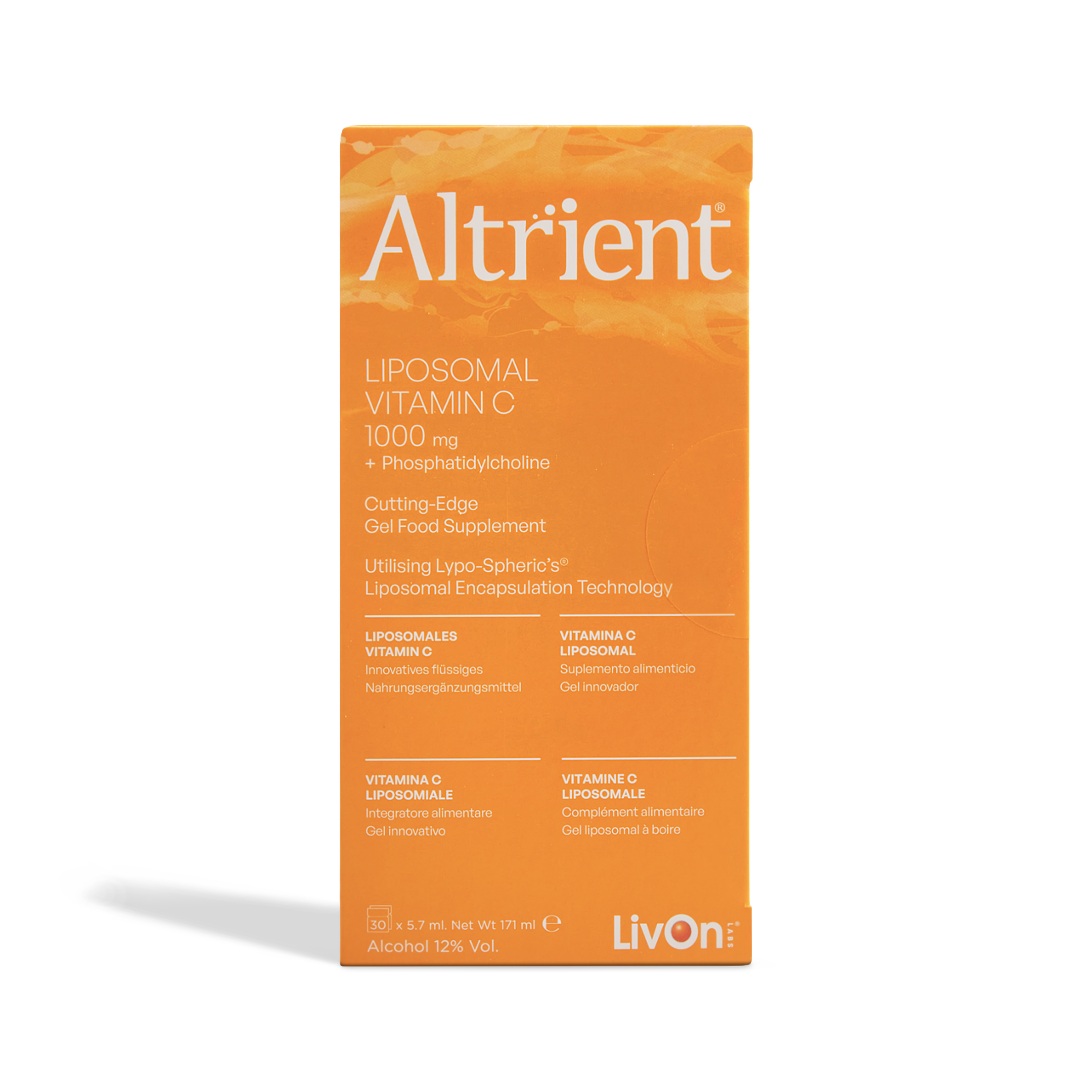
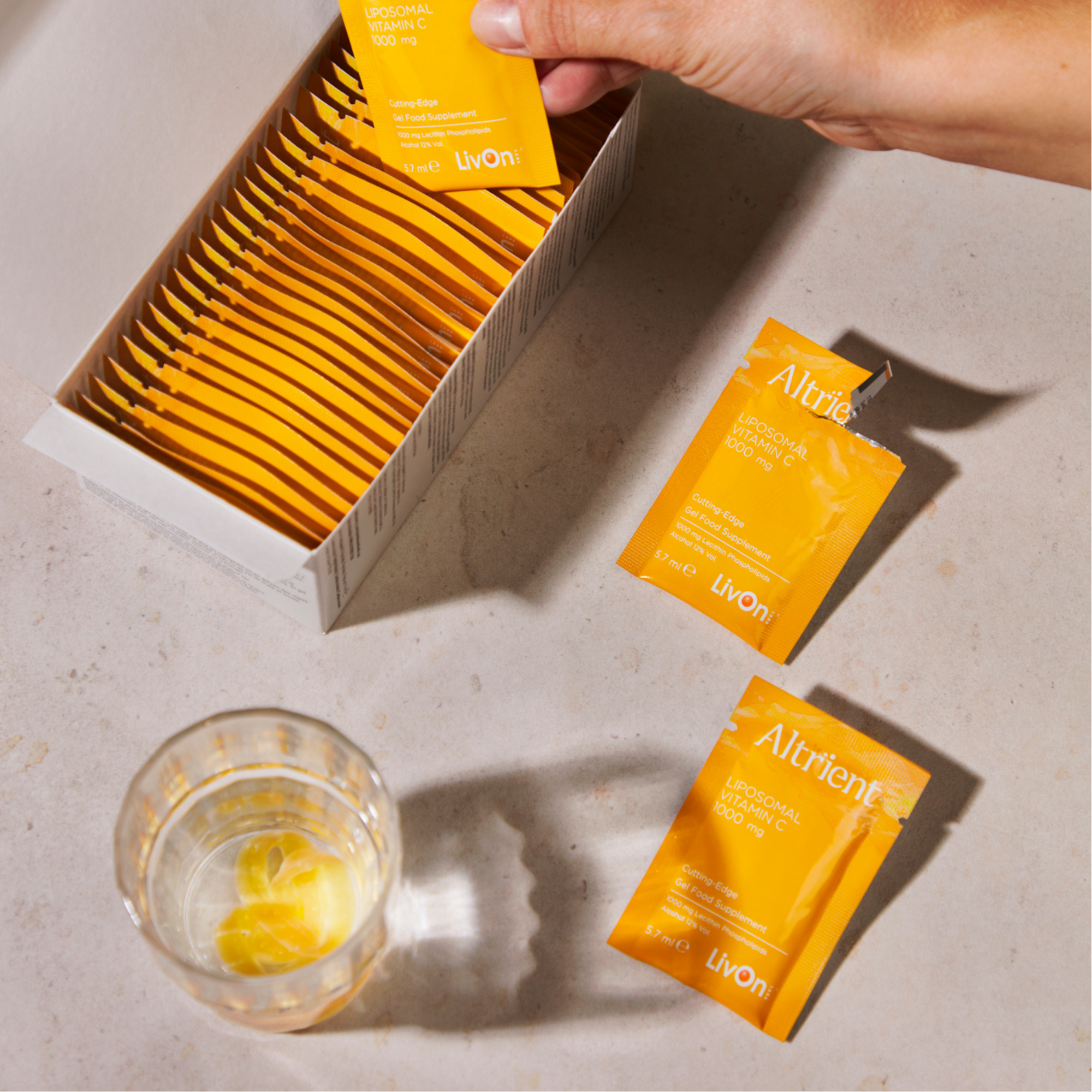
Altrient C provides 1,000 mg of vitamin C as sodium ascorbate, enclosed within a liposomal formulation containing phospholipids, including 500 mg of phosphatidylcholine.
Liposomes are tiny protective bubbles made from phospholipids, the same type of fat-like molecules found in our cell membranes. In Altrient C, they surround the vitamin C, helping to shield the nutrient as it passes through the digestive system. This protective technology helps to improve how much becomes available to the body.
And this is not merely a theoretical advantage.
A 2024 randomised, double-blind, placebo-controlled crossover trial compared 500 mg of conventional vitamin C with 500 mg of liposomal vitamin C in 27 healthy adults. The liposomal preparation produced higher peak vitamin C concentrations in both plasma and white blood cells. Plasma exposure over 24 hours was also higher with the liposomal preparation.6
The 2024 liposomal vitamin C trial at a glance
|
Design |
Randomised, double-blind, placebo-controlled crossover trial |
|
Participants |
27 healthy adults |
|
Compared |
500 mg conventional vitamin C vs 500 mg liposomal vitamin C |
|
Plasma |
Higher peak concentration with liposomal; higher 24-hour exposure |
|
White blood cells |
Higher peak concentration with liposomal |
That last part is particularly interesting for an immunity-focused formulation. In other words, the research is beginning to move beyond the question of whether a liposomal formulation puts more vitamin C into the bloodstream. It is also examining what happens to vitamin C levels within the cells themselves.
A 2025 review of the available human research identified 10 studies comparing liposomal and conventional vitamin C, including seven randomised crossover trials. The authors concluded that the evidence suggests potential improvements in vitamin C bioavailability with liposomal delivery, while also highlighting the need for more research and greater standardisation between formulations.7
That distinction matters. Liposomal does not mean magical, and higher vitamin C levels in the blood do not automatically mean fewer colds. What the research does suggest is more straightforward: how a nutrient is delivered may influence how much of it is ultimately available to the body.
 Build the reserves before you need them
There is another reason to think about vitamin C before cold season rather than after it has arrived.
Vitamin C levels can be affected by infection and physiological stress. Immune cells may use more vitamin C during an active immune response, while plasma and white cell concentrations can fall during infection.3 That makes nutritional status relevant before the immune system is under pressure.
It is a bit like keeping your pantry stocked. You want the essentials there before you need them, rather than discovering they are missing halfway through making dinner.
Vitamin C also has plenty of work outside of immunity. It contributes to normal collagen formation, normal energy metabolism, protection of cells from oxidative stress, reduction of tiredness and fatigue, and normal nervous system function.
So building a nutritional reserve before the colder months is not about trying to outwit every cough, cold or crowded train carriage. It is about giving the body a reliable supply of a nutrient that has multiple jobs, including supporting normal immune system function.
Altrient C: building your vitamin C reserves
Perhaps the most useful change in mindset is to stop thinking about vitamin C as something you reach for only when you start feeling run down.
Your immune system has been ticking over in the background all along. The cells involved in that work actively concentrate vitamin C, sometimes reaching levels many times higher than those found in the blood. However, conventional oral vitamin C has a well-established absorption ceiling, particularly at larger doses.
Liposomal delivery offers one way of addressing the bioavailability challenge, and human research suggests it may increase vitamin C exposure in both plasma and white blood cells.5,7
Altrient C combines 1,000 mg of vitamin C as sodium ascorbate with a phospholipid delivery system designed to enhance bioavailability.
Altrient C at a glance
|
1,000 mg |
vitamin C as sodium ascorbate |
|
500 mg |
phosphatidylcholine |
|
Liposomal |
phospholipid delivery system |
As autumn begins, that makes the timing even more interesting than simply waiting for the first sniffle. The immune system doesn’t wait for winter to start doing its job, so maybe you shouldn’t either.
Frequently Asked Questions
What foods are good sources of vitamin C?
Fruit and vegetables are the main dietary sources of vitamin C. Good options include oranges and other citrus fruits, kiwi, strawberries, blackcurrants, bell peppers, broccoli, Brussels sprouts and tomatoes. Eating a variety of these foods regularly can help provide vitamin C as part of a balanced diet.
Why is vitamin C found in such high concentrations inside some immune cells?
Immune cells actively take up and retain vitamin C, resulting in concentrations that can be many times higher than those found in blood plasma. This reflects the important role vitamin C plays in normal immune cell function, including helping cells respond to challenges and protecting them from oxidative damage.
Does the body store vitamin C?
Unlike fat-soluble vitamins such as vitamins A, D, E and K, vitamin C is water-soluble and the body does not have a large specialised storage depot for it. Vitamin C is continually taken up by tissues and cells, while excess amounts are excreted, which is one reason regular dietary intake is important.
Can vitamin C levels change during an infection?
Yes. Research indicates that vitamin C concentrations in plasma and some immune cells can fall during infections. This is thought to reflect increased use and redistribution of vitamin C during the immune response. Maintaining an adequate intake therefore remains important when the immune system is under increased demand.
Does everyone need a vitamin C supplement?
Not necessarily. Most people can obtain vitamin C through a varied diet containing fruit and vegetables. Supplementation may be considered when dietary intake is inadequate or when a higher intake is appropriate for an individual's circumstances.
Written by Jacqueline Newson BSc (Hons) Nutritional Therapy
References
- Evans RM, et al. The distribution of ascorbic acid between various cellular components of blood, in normal individuals, and its relation to the plasma concentration. British Journal of Nutrition. 1982;47:473-482.
- Bergsten P, et al. Millimolar concentrations of ascorbic acid in purified human mononuclear leukocytes. Depletion and reaccumulation. Journal of Biological Chemistry. 1990;265(5):2584-2587.
- Carr AC, Maggini S. Vitamin C and Immune Function. Nutrients. 2017;9(11):1211.
- NIH Office of Dietary Supplements. Vitamin C: Health Professional Fact Sheet. https://ods.od.nih.gov/factsheets/VitaminC-HealthProfessional/
- Levine M, et al. Vitamin C pharmacokinetics in healthy volunteers: evidence for a recommended dietary allowance. Proceedings of the National Academy of Sciences USA. 1996;93(8):3704-3709.
- Purpura M, et al. Liposomal delivery enhances absorption of vitamin C into plasma and leukocytes: a double-blind, placebo-controlled, randomized trial. European Journal of Nutrition. 2024;63:3037-3046.
- Carr AC. Do Liposomal Vitamin C Formulations Have Improved Bioavailability? A Scoping Review Identifying Future Research Directions. Basic & Clinical Pharmacology & Toxicology. 2025;137(1):e70067.
Leer más
Lo que ocurre bajo la superficie cuando el peso baja deprisa. Los medicamentos GLP-1 como la semaglutida y la tirzepatida han cambiado la forma en que muchas personas abordan la pérdida y el contro...

La menopausia tiene una forma muy suya de hacerte notar partes de tu cuerpo que antes dabas por sentadas. La piel puede notarse más seca o menos firme. Las articulaciones se vuelven a veces menos i...